
Overview
The Custom Destinations page defines reusable routing destinations for special actions, custom dial strings, wait steps, AI flows, and other call-flow functions. Open it from Configuration > Custom Destinations.
The page works against the tenant currently selected in the top bar. The screenshots and demo rows were captured in the Canistracci OIL tenant.

Working with objects
| Task | How to do it |
|---|---|
| Add | Select the New custom destination action, complete the form, and select Save. |
| Edit | Open the custom destination from the list by selecting its name, number, or row action. Change the form and select Save. |
| Delete | Select the row checkbox and use Delete Selected, or open the custom destination and select Delete, then confirm. |
Page functions
| Action | Description |
|---|---|
| New Custom Destination | Opens the creation form for a new custom destination. |
| Delete Selected | Deletes the selected rows after confirmation. |
List columns
| Column | Description |
|---|---|
| Type | Mode selector that changes the behavior of the object. |
| Name | Display name used in lists and references. |
| Parameter | Object setting shown by the form. |
| Action | Object setting shown by the form. |
Add and edit form
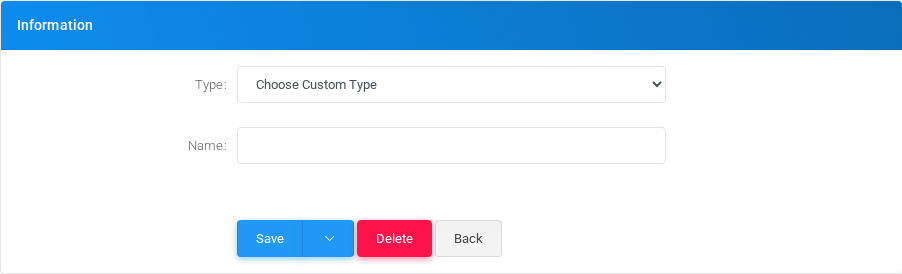
Main fields
| Field | Description |
|---|---|
| Type: | Mode selector that changes the behavior of the object. |
| Name: | Display name used in lists and references. |
| Phone number: | Dialed value, identifier, or matching value used by the PBX. |
| Dial timeout: | Timing value used by the service. |
| CallerID Number: | Dialed value, identifier, or matching value used by the PBX. |
| CallerID Name: | Display name used in lists and references. |
| Add diversion header: | Object setting shown by the form. |
| Diversion header CallerID Number: | Dialed value, identifier, or matching value used by the PBX. |
| Min silence time (ms): | Object setting shown by the form. |
| Silence threshold: | Object setting shown by the form. |
| Caller buddy language: | Caller ID or caller matching value. |
| Called buddy language: | Language or voice selection used for prompts, transcription, or speech synthesis. |
| Generative Artificial Intelligence: | Object setting shown by the form. |
| API key: | Object setting shown by the form. |
| Model: | Object setting shown by the form. |
| System Content: | Object setting shown by the form. |
| User Content: | Object setting shown by the form. |
| Assistant Content: | Object setting shown by the form. |
| Functions: | Object setting shown by the form. |
| Greeting Message: | Object setting shown by the form. |
| Temperature: | Object setting shown by the form. |
| Max Tokens: | Object setting shown by the form. |
| Realtime Voice: | Language or voice selection used for prompts, transcription, or speech synthesis. |
| Turn Detection: | Object setting shown by the form. |
| Semantic VAD eagerness: | Object setting shown by the form. |
| Server VAD threshold: | Server, host, or node selection used by the object. |
| Prefix padding (ms): | Dialed value, identifier, or matching value used by the PBX. |
| Silence duration (ms): | Object setting shown by the form. |
Demo records
The tenant contains 1 documentation demo record for this page: Docs Demo Wait 1.
Deleting records
Before deleting a custom destination, check references from call flows, destinations, schedules, reports, or provisioning objects. MiRTA PBX asks for confirmation before the delete is submitted.